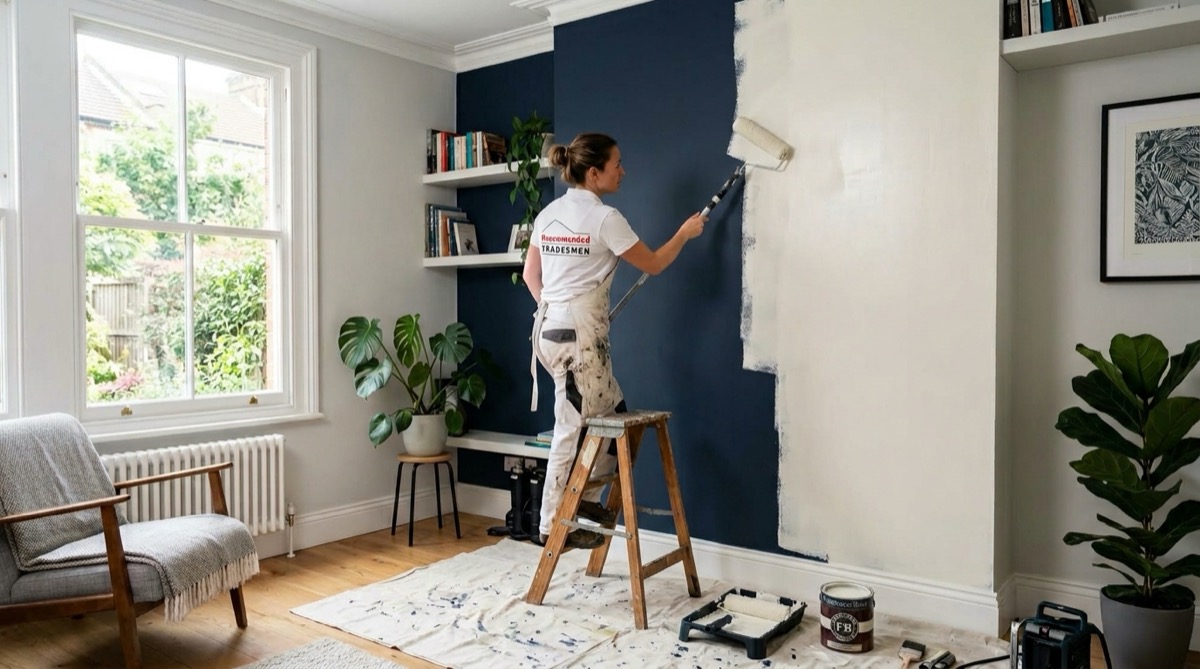
That deep navy or forest green looked great for a few years, but now you want something lighter. Painting over a dark colour is not as simple as slapping on a coat of white. Without the right prep and products, the old colour can bleed through, or you can end up needing five coats. We've painted over dark colours in more rooms than we can count across Croydon, Purley, Kenley, Caterham, Warlingham and Redhill, and the difference between a two-coat job and a five-coat job comes down to primer.
This guide explains how to cover a dark wall properly, first time.
"We are hard working professional tradesmen who charge fair price for good quality work and no nonsense. If you spot a defect, we will come to rectify for free."
— Fred, Recommended Tradesmen, Kenley
Can You Paint Over Dark Colours?
Yes — but only if you prepare properly. Dark pigments are strong, and cheap paint or thin coats will let the old colour show through.
Why You Need Primer
Primer does three things:
- Seals the surface so the old colour cannot bleed through
- Gives the new paint something to grip
- Reduces the number of top coats needed
For very strong colours, a stain block primer or a shellac-based primer gives the best results.
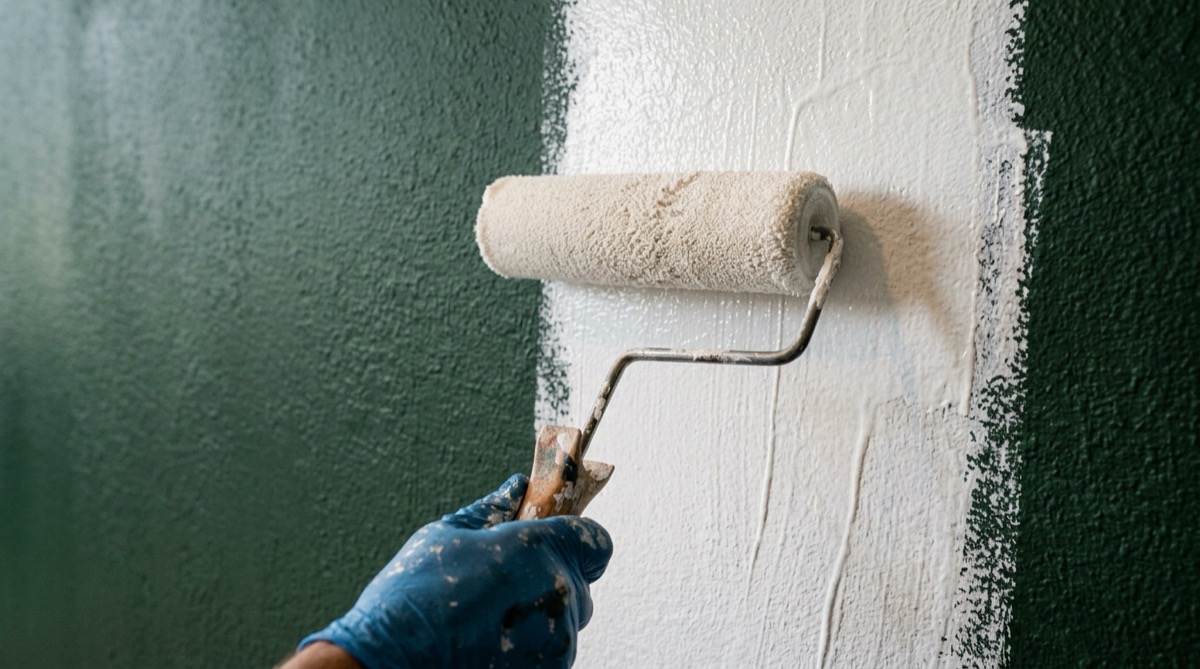
Primer is what turns a five-coat job into a two-coat job.
Best Paints for Covering Dark Colours
High-opacity emulsions.Premium emulsions such as Farrow & Ball, Dulux Trade, Little Greene and Benjamin Moore have better coverage than budget paints.
Paint-and-primer-in-one products. These can work over moderate dark colours, but they rarely replace a separate primer over very dark walls.
Specialist wall primers. Use these first if the existing colour is red, purple, deep blue or black.
How to Paint Over a Dark Colour
Step 1: Clean the wall
Remove dust, grease and marks. Sugar soap works well.
Step 2: Sand lightly
This helps the primer bond.
Step 3: Apply primer
One coat is usually enough. Let it dry fully.
Step 4: Apply first top coat
Cut in first, then roll. Do not roll too thin.
Step 5: Assess coverage
If the old colour is still showing, apply a second top coat.
Step 6: Apply final coat
Two top coats over primer is standard. Three may be needed over very dark colours.
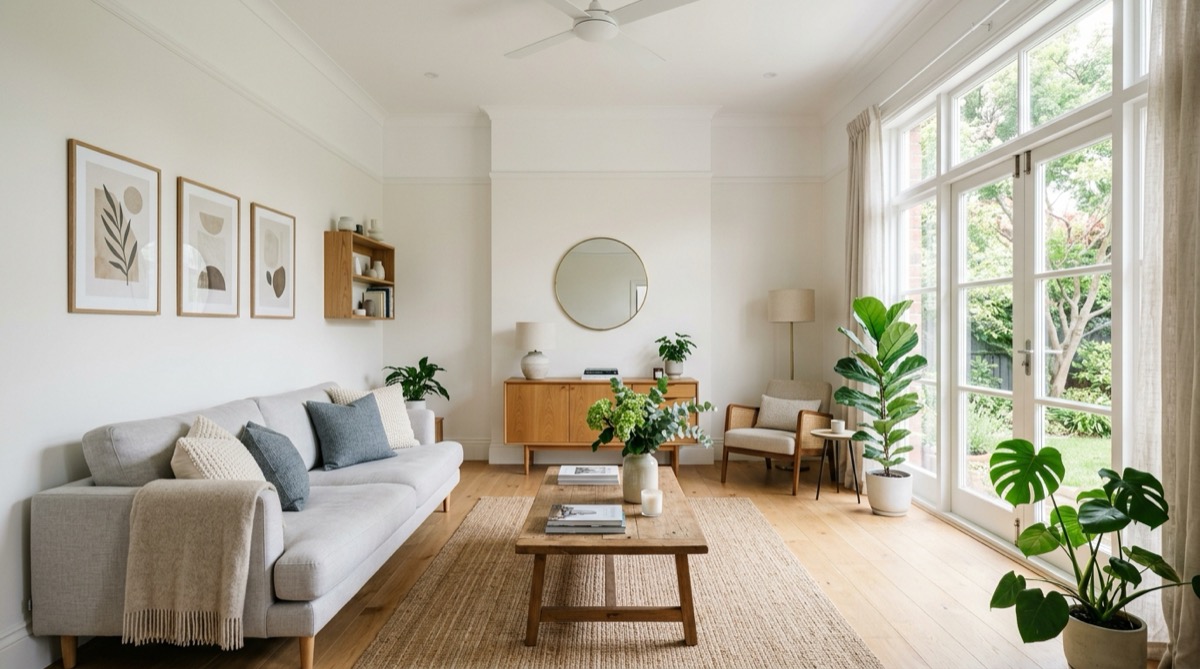
Proper prep, the right primer, two topcoats — and the dark colour is gone for good.
How Many Coats?
| Old colour | Primer | Top coats |
|---|---|---|
| Mid blue/grey | 1 | 2 |
| Deep red/purple | 1 | 3 |
| Black | 1–2 | 3 |
| Bright yellow/orange | 1 | 2–3 |
Common Mistakes
- Skipping primer
- Using cheap paint with poor opacity
- Applying thick coats to compensate
- Painting in damp or cold rooms
- Not allowing proper drying time
"The biggest mistake we see is people buying one tin of cheap white paint and hoping for the best. You end up buying three tins, spending twice as long, and the colour still shows through. A good primer and two topcoats is always cheaper in the end."
— Fred, Recommended Tradesmen
What Not to Do
- Don't assume one coat will cover — dark colours need opacity
- Don't use budget paint on strong pigments
- Don't paint in cold or damp rooms — drying is slower and the finish suffers
- Don't forget the ceiling if it's also dark
- Don't rush between coats
Tools and Materials You'll Need
- Sugar soap or degreaser
- Fine-grit sandpaper
- High-opacity primer or stain block primer
- Quality emulsion in your chosen colour
- Good brushes and rollers
- Dust sheets and masking tape
The primer is the most important item on this list. Skipping it is what turns a two-day job into a five-day job.
Should You DIY or Hire a Professional?
A single dark wall in a small room is a manageable DIY job if you have the time and patience. For whole rooms, ceilings, strong colours like red or black, or walls with damage underneath, a professional will get it done faster and with a better finish.
We often get called in after homeowners have done two or three coats and still see the old colour coming through. At that point, you've spent nearly as much as hiring someone would have cost. Our DIY vs professional painter guide breaks down the trade-offs.
Which Colours Are Hardest to Cover?
The hardest colours to paint over are usually:
- Bright red — pigments are strong and bleed through easily
- Deep purple — similar issue to red
- Black and very dark grey — need high-opacity primer and multiple topcoats
- Bright yellow and orange — can show through pale colours
If your walls are any of these, don't skip the primer. A shellac-based stain block primer is often the safest choice.
How Much Does It Cost to Paint Over Dark Colours?
For a standard room, expect to pay £600–£1,200+ if you're hiring a professional. The extra cost comes from primer, additional coats and the extra labour. Doing it yourself is cheaper on paper, but if you end up needing four or five coats, the saving disappears quickly.
Every room is different, so all prices are bespoke to the job — get a free quote and we'll give you an exact figure. For broader pricing, see our cost to paint a room in Surrey guide.
What If the Old Colour Keeps Coming Through?
Sometimes even after primer and two topcoats, a strong old colour can show hints through the new paint. Options include:
- Applying a second primer coat in a grey tint
- Using a shellac-based stain block primer
- Adding an extra topcoat
- Choosing a slightly darker final colour
This is more common with red, purple, black and bright orange walls. It's also why we always tell customers to budget for a possible extra coat.
Lightening a Room Without White
If you want a lighter feel but find pure white too stark, consider:
- Off-white with warm undertones
- Very pale greige or beige
- Soft sage or muted green
- Pale warm grey
These colours still reflect light but feel warmer and less clinical than brilliant white.
The Mistake of Painting Over Dark Colours Too Quickly
We've been called to homes in Purley where the walls looked perfect on day one, then six weeks later the old colour started ghosting through. The homeowner had used one coat of primer and one coat of cheap white emulsion. We had to sand it back, apply a second primer coat and two proper topcoats. It cost more than doing it properly the first time.
Dark pigments are persistent. Respect them.
Quick Checklist for Painting Over Dark Walls
Before you start, make sure you have:
- Walls cleaned with sugar soap or degreaser
- Loose paint scraped and sanded — our peeling paint repair guide covers this if the old paint is flaking
- Holes and cracks filled
- High-opacity primer or stain block primer
- Quality emulsion in your chosen colour
- Two to three days available including drying time
- Good ventilation in the room
Tick every box and you'll avoid the most common failures. For local help, see our Kenley painter and decorator page.
Frequently Asked Questions
Can you paint white over black without primer?
Technically yes, but you will usually need four or more coats. Primer saves time and money.
What is the best primer for dark colours?
A high-opacity acrylic primer works for most walls. Shellac-based primer is best for stubborn colours or stains.
Do I need to sand before priming?
Light sanding helps adhesion, especially if the old paint is glossy or has sheen.
Can I paint over wallpaper?
Only if the wallpaper is firmly stuck and you prime it first. Loose or textured wallpaper should be removed.
How long does it take to paint over a dark wall?
Including drying time, allow two to three days for a single room.
Why does the old colour still show through?
Usually because the primer wasn't good enough, the topcoat was too thin, or not enough coats were applied.
Can I use one-coat paint over dark colours?
Rarely. One-coat paints work over similar or lighter shades, not strong dark colours.
Should I paint the ceiling too?
If the ceiling is dark or stained, yes. Ceilings often need stain block primer and two topcoats.
What is the best paint brand for covering dark colours?
Farrow & Ball, Dulux Trade, Little Greene and Benjamin Moore all make high-opacity emulsions that cover better than budget ranges.
Can I paint a dark wall light in one day?
No. Primer plus two topcoats with proper drying time takes at least two to three days.
Related Posts
How Much Does It Cost to Paint a Room in Surrey?
Realistic 2026 pricing for rooms of every size
How to Fix Peeling Paint
Sort the surface properly before any new colour goes on
DIY vs Professional: When to Hire a Painter
When covering a dark colour is beyond a weekend job
Services We Offer
Covering dark colours properly is one of the most common jobs we're asked to fix. Here's how we can help:
Interior Painting & Decorating
Proper primer, quality paint and a finish that covers first time.
Exterior Painting
Dark exterior masonry and woodwork lightened and weather-protected.
Plastering
Sound, smooth walls when the damage sits under the old colour.
Wallpapering
Prefer paper over paint? Stripping, lining and hanging done properly.
Want to Lighten Up a Room Without the Hassle?
We paint over dark colours across Croydon, Purley, Kenley, Caterham, Warlingham, Redhill and surrounding areas. Proper prep, the right primer and a finish that covers first time.
Or email: info@recommended-tradesmen.co.uk
Last updated: September 2026. Based on 15+ years of painting and decorating homes in Surrey.