The Problem
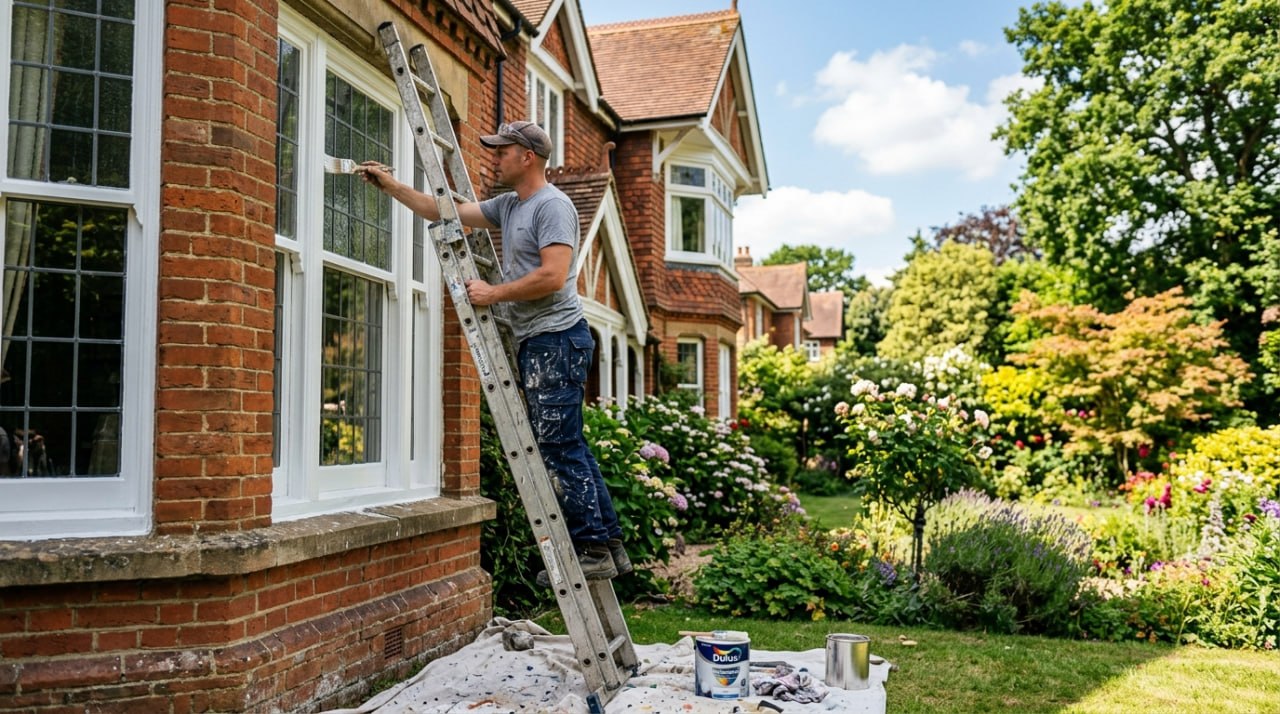
You look at your front door, your window frames, your garden fence, and you think: that needs painting. It's July, the sun is out, and it feels like the right time.
But timing exterior painting by the season on the calendar is a mistake. I've painted exterior woodwork in Croydon, Purley, Kenley and Caterham for 15 years. I've seen paint applied in April that peeled by October because the temperature dropped overnight. I've seen paint applied in August that bubbled because the wood was too hot. I've seen paint applied in September that lasted perfectly because the conditions were exactly right.
The finish isn't just about the paint you use. It's about the temperature, the humidity, the wind, the surface temperature of the wood, and whether it rained in the previous 48 hours.
This guide tells you when to paint exterior woodwork in Surrey — and when to wait.
How to Choose the Right Time: It's Not Just "Summer"
Most people think: summer = good for painting. That's roughly true, but "summer" in Surrey runs from June to September, and only some of those days are actually suitable for exterior painting.
Paint needs specific conditions to cure properly:
Temperature: The air temperature needs to be between 10°C and 30°C. Below 10°C, the paint won't cure — it sits on the surface and remains tacky. Above 30°C, the paint dries too fast — it skins over before the underneath has dried, causing cracking and poor adhesion.
Surface temperature: The wood itself needs to be within the same range. Dark wood in direct sun can reach 40°C even when the air is 25°C. Painting on hot wood is like painting on a radiator — the paint dries instantly and doesn't bond.
Humidity: Below 85% relative humidity is the rule of thumb. Above that, moisture in the air stops the paint curing. In Surrey, humidity is usually fine in summer, but watch out for those humid days before a thunderstorm.
Rain: The surface must be dry. Not just dry to the touch — dry all the way through. If it rained in the last 48 hours, the wood might still be holding moisture. Paint over damp wood and it will blister and peel within months.
Wind: A gentle breeze helps paint dry evenly. Strong wind blows dust and debris onto wet paint. No wind at all can trap solvent fumes and slow drying.
Why the Timing Matters: The Science of Paint Curing
Paint doesn't "dry" in the way most people think. It doesn't just evaporate like water. It cures — a chemical process where the binder in the paint forms a solid film.
For oil-based paints, this is oxidation. The paint reacts with oxygen in the air to harden. Too cold and the reaction slows down. Too hot and the surface skins over before the underneath can react, trapping solvents and causing cracking.
For water-based paints, this is evaporation and coalescence. The water evaporates, and the acrylic particles fuse together. Too cold and the water doesn't evaporate properly. Too humid and the air is already saturated with moisture, so the water can't leave the paint film.
If the paint doesn't cure properly, it fails. It peels, it cracks, it blisters, it fades. The preparation can be perfect, the paint can be expensive, but if the conditions are wrong, the job fails.
This is why a professional painter checks the weather forecast for the next 72 hours before starting exterior work. Not just "will it rain?" but "what's the temperature, humidity, and wind?"
The Best Months for Exterior Painting in Surrey
April:
Variable. Early April is usually too cold — overnight temperatures can still drop below 5°C. Late April can be suitable, but check the forecast carefully. The wood is often still damp from winter rain. We rarely start exterior work in April unless it's a particularly warm, dry spring.
May:
Good. Temperatures are usually stable, humidity is moderate, and there's enough daylight. The risk is late spring rain and pollen — pollen settles on wet paint and sticks. We check the forecast for rain and avoid painting if there's a pollen alert.
June:
Excellent. Long days, stable temperatures, low humidity. The best month for exterior painting in Surrey. Book early — good painters are usually fully booked by May.
July:
Good, but watch for heat. Mid-July can be too hot for painting in direct sun. We paint east-facing woodwork in the morning (cooler) and west-facing woodwork in the late afternoon (cooler). Never paint in direct midday sun in July.
August:
Variable. Early August is usually good. Late August can be humid — thunderstorm season. Humid air before a storm can ruin a paint job. We check humidity levels and avoid painting if it's above 85%.
September:
Good early in the month. The temperatures are still stable, the humidity is dropping, and there's less pollen. Late September becomes risky — overnight temperatures can drop below 10°C, and morning dew keeps the wood damp until mid-morning. We need to start later in the day and finish earlier.
October:
Generally too late. The temperature drops, the wood stays damp, and there's not enough daylight to get a full day's work done. We might do emergency touch-ups, but we don't start full exterior jobs in October.
November to March:
Don't paint exterior woodwork. The temperature is too low, the wood is too damp, and the paint won't cure. Some modern acrylic paints claim to be suitable down to 5°C, but we don't risk it. The finish won't last.
How to Prepare Exterior Woodwork for Painting
Preparation is everything. A paint job is only as good as the surface underneath. Here's our process:
Step 1: Inspect the wood.
Check for rot, cracks, loose joints, and failing putty. Rot needs cutting out and replacing with new timber. Cracks need filling with a flexible exterior filler. Loose joints need regluing or screwing. Failing putty around window glass needs removing and replacing with new linseed oil putty or modern glazing compound.
Step 2: Remove old paint (if it's failing).
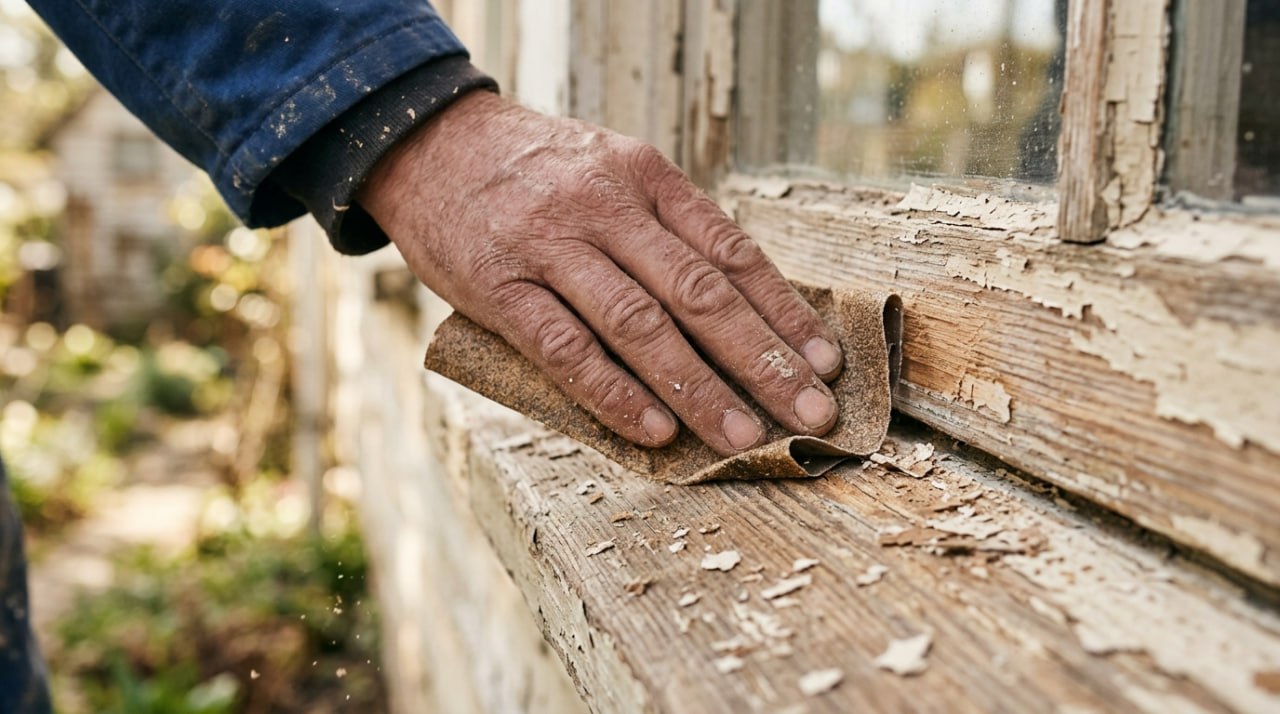
If the old paint is peeling, flaking, or blistering, it needs removing. We use a heat gun and scraper for thick layers, or a paint stripper for detailed mouldings. Don't sand old lead paint — if your house is pre-1960, test for lead first. We use a professional lead testing kit and follow HSE guidelines.
Step 3: Sand smooth.
Once the loose paint is off, sand the surface to create a key for the new paint. We use 120-grit sandpaper for flat areas and 180-grit for detailed work. The surface should feel smooth but not glassy — paint needs a slight texture to grip.
Step 4: Clean thoroughly.
Remove all dust with a vacuum and a tack cloth. Then wash with sugar soap and water to remove grease, dirt, and any mould. Rinse and allow to dry completely. This is critical — paint won't stick to dirty or greasy wood.
Step 5: Repair and fill.
Fill cracks, holes, and joints with an exterior-grade flexible filler. For larger repairs, we use two-part epoxy wood filler. Allow to dry and sand smooth. Prime bare wood with an exterior wood primer — this seals the timber and prevents moisture getting in.
Step 6: Prime bare wood and filler.
Any bare wood, new filler, or exposed timber needs priming. We use a high-quality exterior wood primer that penetrates the grain and provides a solid base for the topcoats. Don't skip primer on bare wood — the paint will fail within a year if you do.
Step 7: Caulk gaps and joints.
Use a flexible exterior caulk around joints, gaps between frames and brickwork, and anywhere water could get in. This stops rainwater penetrating behind the paint and causing rot. Smooth with a wet finger and allow to dry before painting.
Step 8: Mask and protect.
Mask glass, brickwork, door furniture, and anything you don't want paint on. Use proper exterior masking tape — cheap tape leaves residue or fails in sun. Lay dust sheets to protect paths, plants, and paving.
Step 9: Paint in the right conditions.
Check the weather. Check the temperature. Check the humidity. Paint in the shade if possible, or follow the sun around the house. Two thin coats are better than one thick coat — they dry properly, cure evenly, and last longer.
The Best Paint for Exterior Woodwork in Surrey
Surrey's climate isn't extreme, but it's wet. We get 600–700mm of rain per year, and winters are damp. The paint needs to handle that.
Oil-based gloss: Traditional, hard-wearing, glossy finish. Takes 16–24 hours to dry between coats. Needs white spirit to clean brushes. Excellent durability — 7–10 years on well-prepared wood. But it's being phased out due to VOC regulations. We can still get it, but it's getting harder to find high-quality oil-based gloss.
Water-based acrylic gloss: Modern replacement for oil-based. Dries in 2–4 hours. Cleans with water. Less glossy than oil-based — more of a satin finish. Good durability — 5–7 years. Better for the environment and easier to work with. We use Dulux Weathershield or Sadolin Classic for most exterior work.
Microporous stains and oils: Penetrates the wood rather than sitting on top. Allows the wood to breathe and moisture to escape. Ideal for hardwoods, oak doors, and timber that moves. Needs reapplying every 2–3 years but is easy to maintain — just clean and recoat. We use Osmo UV Protection Oil or Ronseal Decking Oil for fences and sheds.
Saturators and preservatives: For garden fences, sheds, and decking. Not technically "paint" — they soak in and protect. Need reapplying annually. Cheap and quick, but don't expect a glossy finish.
What we recommend:
- Front doors and windows: Water-based acrylic gloss (Dulux Weathershield or equivalent) — 2 coats over primer
- Fascias and soffits: Same as doors and windows, or a dedicated exterior eggshell for a lower-sheen finish
- Garden fences: Microporous stain or oil — easier to maintain, looks natural
- Sheds and outbuildings: Preservative or stain — functional, not decorative
"I've painted doors in Purley that have lasted 12 years because we painted them in the right weather with the right prep. I've also had to repaint doors in Coulsdon after 18 months because the previous painter did it in October, on a damp surface, with cheap paint. The difference isn't the paint — it's the preparation and the conditions. We always check the weather for the next three days. If it's not right, we wait. A customer might be annoyed we're delaying, but they're a lot more annoyed when the paint peels in six months."
— Fred, Recommended Tradesmen, Kenley
DIY vs Professional: When to Hire a Painter for Exterior Work
DIY is fine for:
- Garden fences — easy to reach, no ladders, low stakes
- Small sheds — quick job, easy to redo if it goes wrong
- Touch-ups — small areas where the paint is sound and you just need to refresh the topcoat
Hire a professional for:
- Front doors — high visibility, complex shape, needs to look perfect
- Windows at height — ladder work, safety risk, needs proper equipment
- Full house exterior — scaffolding, multiple days, proper preparation
- Wood with rot or damage — needs repair skills, not just painting skills
- Listed buildings or conservation areas — may need specific paint types and approval
Exterior work on a Victorian house in Warlingham or Redhill is different from a modern semi-detached in Coulsdon. The wood is older, the detail is more complex, and the prep is more involved. We've got the ladders, the scaffolding, the experience with period properties, and the patience to do it properly.
If you're planning exterior work, take a look at our exterior painting service to see how we handle doors, windows, fascias, and more.
Cost Guide: What You'll Pay for Exterior Painting
These exterior prices are based on a professional painter and decorator day rate of £250–£350 in the Surrey/London-fringe market, plus materials and access. Exterior work is weather-dependent and often needs scaffolding, so the final price depends on condition, height, and paint type.
| Job | Scope | Price Range | Notes |
|---|---|---|---|
| Front door repaint | Remove hardware, strip/sand, prime, 2 coats | £250–£400+ | Includes door furniture refitted. Hardwood doors need specific primer. |
| Window frames (4-bed house) | Sand, repair, prime, 2 coats | £800–£1,500+ | Depends on condition. Rot repair adds cost. Scaffolding for upper floors adds £200–£400. |
| Fascias and soffits | Clean, repair, prime, 2 coats | £600–£1,200+ | Usually needs scaffolding. Access is the main cost driver. |
| Garden fence (6 panels) | Clean, treat, 2 coats stain/oil | £300–£500+ | Quick job, but needs dry weather for 2–3 days. |
| Shed or outbuilding | Clean, treat, 2 coats | £200–£400+ | Functional finish, not decorative. |
| Full house exterior (3-bed semi) | All woodwork, scaffolding, prep, 2 coats | £2,500–£4,000+ | Major job. Scaffolding, multiple days, weather-dependent. |
Important: Prices are approximate — every job is different. The actual cost depends on the condition of the wood, the height of the work, access requirements, and the paint type. Rot repair, scaffolding, and lead paint removal all add cost. The best way to get an accurate figure is to get in touch for a bespoke quote.
Related Posts
How Much Does It Cost to Paint a Room in Surrey? (2026 Price Guide)
Interior pricing for comparison
How to Hire a Painter in Surrey: 5 Red Flags
Choosing the right professional for exterior work
Property Refurbishment in Surrey: Where to Start
If your exterior work is part of a larger renovation
Frequently Asked Questions
When is the best time to paint exterior woodwork in Surrey?
The best months are May, June, and early September. June is ideal — stable temperatures, low humidity, long days. July is good but avoid painting in direct midday sun. August can be humid before thunderstorms. Avoid April (too cold), late September (temperature drops), and October to March (too cold and damp).
Can you paint exterior wood in the rain?
No. The wood must be completely dry — not just dry to the touch, but dry all the way through. If it rained in the last 48 hours, the wood may still be holding moisture. Paint over damp wood and it will blister and peel within months. Also, paint won't cure properly in rain or high humidity. Wait for dry weather with at least 72 hours of dry conditions forecast.
What temperature is too cold to paint outside?
Below 10°C is too cold for most exterior paints. The paint won't cure properly and remains tacky. Some modern acrylics claim to work down to 5°C, but we don't recommend it. The finish won't last. Overnight temperatures matter too — if it drops below 10°C at night, the paint can fail even if the daytime temperature was suitable.
What temperature is too hot to paint outside?
Above 30°C is too hot. The paint dries too fast, skins over before the underneath can cure, and cracks. But surface temperature matters more than air temperature. Dark wood in direct sun can reach 40°C even when the air is 25°C. Paint in the shade, or follow the sun around the house — east-facing in the morning, west-facing in the late afternoon. Never paint in direct midday sun in July.
How long does exterior paint take to dry?
Water-based acrylics dry to the touch in 2–4 hours and can be recoated in 4–6 hours. Oil-based gloss takes 16–24 hours between coats. But 'dry to the touch' isn't the same as 'fully cured.' Paint needs 2–4 weeks to fully cure and harden. During that time, avoid heavy rain, touching the surface, or placing objects against it.
Do I need to prime exterior wood before painting?
Yes, always on bare wood. Primer seals the timber, prevents moisture getting in, and gives the topcoat something to grip. Skip primer and the paint will fail within a year — peeling, blistering, or flaking. If the existing paint is sound and you're just refreshing the topcoat, you don't need primer. But any bare wood, new filler, or sanded-through areas must be primed before topcoating.
How do I prepare exterior wood for painting?
Remove old failing paint with a scraper and heat gun. Sand smooth with 120-grit paper. Clean with sugar soap and water. Repair rot and cracks with exterior filler. Prime bare wood and filler. Caulk gaps and joints. Mask glass and brickwork. Check the weather forecast for 72 hours of suitable conditions. Then apply two thin coats of exterior paint, allowing proper drying time between coats.
What's the best paint for exterior doors and windows?
We recommend water-based acrylic gloss (like Dulux Weathershield) for most exterior woodwork. It dries quickly, cleans with water, and lasts 5–7 years. For a traditional high-gloss finish, oil-based gloss is still available but being phased out due to VOC regulations. For hardwoods and timber that moves, use a microporous stain or oil that allows the wood to breathe.
How long does exterior paint last on wood?
With proper preparation and good quality paint: oil-based gloss lasts 7–10 years, water-based acrylic lasts 5–7 years, and microporous stains need reapplying every 2–3 years. The biggest factor is preparation. Paint on damp, dirty, or unprimed wood will fail in 1–2 years regardless of the paint quality. Paint on properly prepared, primed, dry wood with the right paint in the right weather will last the full expected time.
Should I paint my garden fence or use a stain?
For garden fences, a stain or oil is usually better than paint. Paint sits on the surface and can crack or peel as the wood expands and contracts. Stains and oils penetrate the wood, protect it from within, and are easier to maintain — just clean and recoat every 1–2 years. For a decorative fence in a formal garden, paint can look better. For functional boundary fences, stain is more practical and longer-lasting.
Exterior Services We Offer
We help homeowners across Surrey with exterior woodwork, painting, and finishing. If your doors, windows, or fascias need attention, here's where we can help:
Exterior Painting
Doors, windows, fascias, soffits, and all exterior woodwork — painted in the right weather, with the right prep.
Interior Painting & Decorating
Walls, ceilings, woodwork, and final finishes for every room in the house.
Carpentry
Rot repairs, timber replacement, and structural woodwork before painting begins.
Handyman Services
Final fittings, door furniture, and those small finishing jobs that complete the exterior.
Need Exterior Painting in Surrey?
We check the weather, prepare the wood properly, and use the right paint for the job. Based in Kenley, covering all of Surrey. Free quotes with no pressure.
Or email: info@recommended-tradesmen.co.uk
Last updated: July 2026. Based on 15+ years of painting and decorating homes in Surrey. If you're planning exterior painting work and need help getting the timing right, get in touch for a free quote.