Most homeowners in Surrey hire a painter twice in their lifetime. The first time goes badly. The second time, they know what to look for.
I've been painting homes across Croydon, Purley, Kenley and Caterham for over 15 years. In that time, I've been called in to fix other painters' mistakes more times than I can count. Peeling paint within six months. Drips on skirting boards. Wallpaper bubbling underneath because they didn't seal the walls. One customer in Coulsdon paid £800 for a "professional" job that looked like it'd been done by a teenager with a roller from B&Q.
The worst part? All of it was avoidable. The warning signs were there before they even started.
This guide shows you the 5 red flags I tell my friends and family to watch for. If you spot any of these, keep looking.
How to Hire a Painter: The Process That Works
Before we get to the red flags, here's how to actually find a good painter in Surrey. It's not complicated, but most people skip half these steps.
Step 1: Start with people you trust. Ask neighbours, friends, or colleagues who've had work done recently. Not just "do you know a painter?" — ask "would you use them again?" and "what didn't go well?" A recommendation with one caveat is worth more than a five-star review with no detail.
Step 2: Check online reviews properly. Don't just look at the star rating. Read the 3-star and 4-star reviews — they tell you what the painter is actually like to work with. Look for patterns: do three people mention they were late? Do two mention mess? Those are the real signals. We have five-star reviews on Google due to our customer satisfaction, but I'd rather you read the one 4-star review we got than skim the five-stars.
Step 3: Get three quotes. Not because you want the cheapest. Because you want to see who's professional and who isn't. The quote itself tells you everything — keep reading.
Step 4: Ask about their process. A good painter will walk you through protection, prep, priming, coats, and cleanup without you prompting. A bad one will say "yeah, we just paint it."
Step 5: Check their insurance. Any painter working in your home should have public liability insurance. We carry £1 million. If they can't show you a certificate, don't let them through the door.
Why Red Flags Matter: The Cost of Getting It Wrong
Here's why this isn't just about a bad paint job. A bad painter costs you in ways you don't see until months later:
- Re-doing the work: £800–£1,800 for a standard room, depending on what they ruined
- Repairing damage: Dripping paint on carpets, scratched woodwork, damaged fixtures
- Health issues: Cheap paint with high VOCs, dust from sanding without extraction, poor ventilation
- Time wasted: Weeks of disruption, living in half-painted rooms, coordinating someone else to fix it
- Stress: The biggest cost nobody talks about. Your home is your space. Having it done badly is genuinely upsetting.
One customer in Warlingham had a "cheap" painter leave paint drips on her oak floor. The floor needed sanding and resealing. That £400 "saving" on the painter cost her £2,200 to fix.
Red Flag 1: No Written Quote — Or a Quote That Says "Paint Room: £300"
A proper quote breaks down what's included. Ours specify:
- Room dimensions and surfaces
- Condition assessment (cracks, peeling, damp)
- Prep work required (sanding, filling, priming)
- Number of coats
- Paint type and brand
- Protection of floors and furniture
- Cleanup and reinstallation of fixtures
- Timeline
A quote that just says "paint bedroom £500" tells you one thing: they haven't looked at the room properly. Or they have, and they're guessing. Either way, you don't know what's included. Is paint extra? Is prep extra? Will they move furniture? What happens if they find blown plaster behind the wallpaper?
What to do instead:
Ask for a detailed written quote. If they push back or say "it's just a standard room," that's your answer.
Red Flag 2: They Want Cash Upfront — Or All of It Before They Start
No professional painter asks for full payment upfront. We ask for nothing upfront on small jobs. On larger projects, we might ask for a small deposit after the quote is accepted — never more than 25%. The balance is due on completion, when you've inspected the work.
Cash-only, no invoice, no VAT number? That's not a discount. That's someone who doesn't want a paper trail. If something goes wrong, you have no recourse. No invoice means no contract. No contract means no comeback.
What to do instead:
Pay by bank transfer. Get a proper invoice with VAT if applicable. It protects both of you.
Red Flag 3: They Don't Talk About Prep — Or Say "It'll Be Fine"
Preparation is 70% of a good paint job. Anyone can slap paint on a wall. The difference between a job that lasts 2 years and one that lasts 10 is what's underneath.
A proper painter will talk about:
- Filling cracks and holes
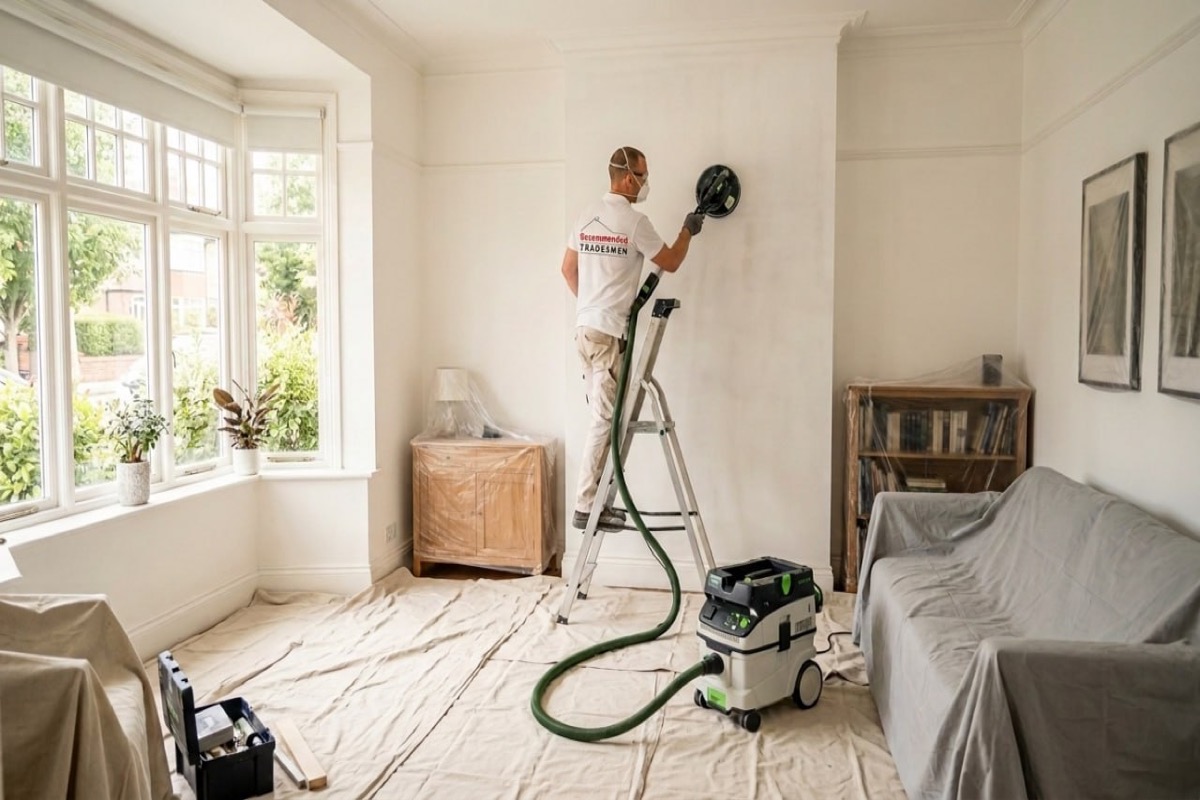
- Sanding smooth (we use dustless sanding to protect your home)
- Priming bare plaster or wood
- Sealing stains (water damage, nicotine, crayon marks from kids)
- Cleaning surfaces (grease, dust, old wallpaper adhesive)
- Testing for lead paint in older properties
If they say "we'll just paint over it" or "a bit of filler will sort it," ask what filler, what primer, and how many coats. If they can't answer, they don't know. And if they don't know, your paint will peel.
What to do instead:
Ask specifically about their prep process. A professional will explain it without prompting. An amateur will deflect.
Red Flag 4: They Can't — Or Won't — Show You Previous Work
Every painter has photos. Every single one. If they say they don't, they're either lying or they're new. Both are red flags.
But don't just look at the photos. Ask about the jobs:
- "Where was this one?"
- "What was the condition of the walls before?"
- "How long did it take?"
- "Would the customer use you again?"
We show every customer our gallery of completed projects — before, during, and after shots. Not because we're showing off, but because it proves we do what we say.
What to do instead:
Ask for photos of similar jobs to yours. If you're painting a Victorian hallway with original cornicing, ask to see Victorian hallway work. Generic living room photos don't tell you anything.
Red Flag 5: They're Available Tomorrow — Or They're "Just Passing Through"
Good painters are busy. That's not a sales tactic — it's a fact. In Surrey, the best decorators are booked 2–6 weeks ahead, especially in spring and summer when everyone's doing exterior work.
If someone can start tomorrow, ask why. Are they between jobs because the last one went badly? Are they not getting repeat business? Are they not from the area and "just passing through"?
We cover Croydon, South Croydon, Sanderstead, Purley, Kenley, Caterham, Coulsdon, Warlingham, Redhill and Whyteleafe. We're local. We're not passing through. And yes, we're usually booked a few weeks ahead — but we always fit urgent jobs in if we can, especially for repeat customers.
What to do instead:
A painter who's busy is a painter who's good. Ask when they're free. If it's next week, ask why. If it's "whenever you want," be cautious.

"I've been doing this 15 years. I've seen every shortcut, every cheap trick, every promise that wasn't kept. We are hard working professional tradesmen who charge fair price for good quality work and no nonsense. If someone quotes you £300 for a room that should cost £800, they're not saving you money — they're costing you money. Because you'll be paying someone else to fix it in six months."
— Fred, Recommended Tradesmen, Kenley
Why We Wrote This Guide
We wrote this because we get called to fix other painters' work. It's not our favourite phone call. We don't enjoy telling someone their £500 paint job needs £1,200 of remedial work. We'd rather you get it right first time — whether that's with us or another professional.
If you're reading this because you're researching before hiring, you're already doing the right thing. Most people don't. They Google "painters near me," pick the first one with a decent photo, and hope for the best.
Don't hope. Ask questions. Check the red flags. And if someone won't answer your questions properly, that's the biggest red flag of all.
Related Reading
How Much Does It Cost to Paint a Room in Surrey? (2026 Price Guide)
Know what fair pricing looks like before you get quotes
Painter vs Decorator: What's the Difference?
Who does what, when you need both, and how to choose the right trade for your Surrey home.
DIY vs Professional: When to Hire a Painter
Some jobs you can do yourself. Here's how to know which is which.
Frequently Asked Questions
How do I know if a painter is legitimate?
Check three things: insurance (they should show you a certificate), online reviews (read the 3-star and 4-star ones for the real story), and a detailed written quote. A legitimate painter has nothing to hide. Ask for their VAT number if applicable. Checkatrade, Which? Trusted Traders, and Google Reviews are the best places to verify.
Should I pay a painter upfront?
No professional painter asks for full payment upfront. We ask for nothing upfront on small jobs. On larger projects, we might take a small deposit after the quote is accepted — never more than 25%. The balance is due on completion, after you've inspected the work. If someone insists on full payment before they start, that's a red flag.
What questions should I ask a painter before hiring?
Ask about their prep process (filling, sanding, priming), what paint they'll use, how many coats, how long it will take, how they'll protect your floors and furniture, and what happens if you're not happy with the finish. A good painter will answer all of these without prompting. If they deflect or say "it'll be fine," keep looking.
How many quotes should I get for painting?
Get three. Not to find the cheapest — to compare what's included. One quote might include prep work, premium paint, and a guarantee. Another might be cheaper but exclude everything that matters. Comparing three quotes shows you what's standard and what's not. If one is suspiciously low or high, ask why.
What's the difference between a painter and a decorator?
A painter applies paint to walls, ceilings, and woodwork. A decorator handles the broader job — colour advice, wallpapering, soft furnishings, and the overall look of a room. Many tradespeople do both. We offer interior painting and decorating, wallpapering, carpentry, and plastering as part of a complete service.
How long should a painter take to paint a room?
A standard bedroom with good walls takes 2–3 days. A living room with prep work takes 3–4 days. If someone says they can do it in half a day, they're either cutting corners or they haven't looked at the room properly. Proper prep takes time. Rushing it means the paint won't last.
Is it worth hiring a professional painter or should I DIY?
DIY makes sense for small jobs — a single wall, a garden fence, a door. For anything involving prep work, multiple rooms, or expensive finishes, hire a professional. The cost of fixing a DIY mistake usually exceeds what you'd have paid a pro in the first place.
What insurance should a painter have?
Public liability insurance is essential. It covers damage to your property or injury to you or your family. We carry £1 million. If they damage something or get injured and they're not insured, it's your problem. Always ask to see their certificate.
Do painters guarantee their work?
A professional should. We offer a 24-month workmanship guarantee. If the paint peels, cracks, or fails because of something we did, we come back and put it right at no cost. If a painter won't guarantee their work, ask why. In 15 years, we've had fewer than five callbacks, and every one was resolved within a week.
How do I check online reviews for painters properly?
Don't just look at the star rating. Read the detailed reviews — especially 3-star and 4-star ones. Look for patterns: do multiple people mention punctuality, cleanliness, or communication? Check multiple platforms (Google, Checkatrade, Which? Trusted Traders) rather than relying on one. Be wary of reviews that all sound the same — they might be fake.
What's included in a professional painting quote?
A proper quote should specify: the room dimensions, condition assessment, prep work required, number of coats, paint type and brand, protection of floors and furniture, cleanup, timeline, and total cost. If any of these are missing, ask. A vague quote means vague work.
Ready to Hire a Painter You Can Trust?
Based in Kenley, covering all of Surrey. Written quotes, fixed prices, and a 24-month guarantee. No red flags — just good work.
Or email: info@recommended-tradesmen.co.uk
Last updated: July 2026. These red flags come from 15+ years of painting in Surrey. If you're unsure about a painter you've found, give us a call — we'll tell you honestly whether they sound legitimate.